10 Classroom Culture Strategies for Teachers That Actually Work
Sep 02, 2024
Teach Like a Top TEN™
10 Classroom Culture Moves That Actually Work
By now, you know what’s working in your classroom. Let’s work on what isn’t.
By the end of September, you know a lot more about your classroom than you did on Day One.
You know which routines are solid. Which transitions take too long. Where student talk falls apart. What you’re still repeating. And which moments you seem to be managing over and over.
The easiest time to get better at teaching is when you’re teaching.
You do not need to wait until next year to fix something that isn’t working.
Notice the moment. Teach into it. Practice it. Notice what happens. Reflect. Grow.
TEACH → PRACTICE → NOTICE → REFLECT → GROW
That is how classroom culture gets built.
Not through décor. Not through behavior charts. And definitely not by managing the same problem harder every day.
Culture First. Behavior Second.™
Strong classrooms are built through High Expectations, Student Voice, and Relationships. These ten moves give you places to start with the students sitting in front of you right now.
And if “I’ll wait...” is one of the phrases you hear yourself saying all day, keep reading. We’re fixing that one too.
Want to start with your teacher language?
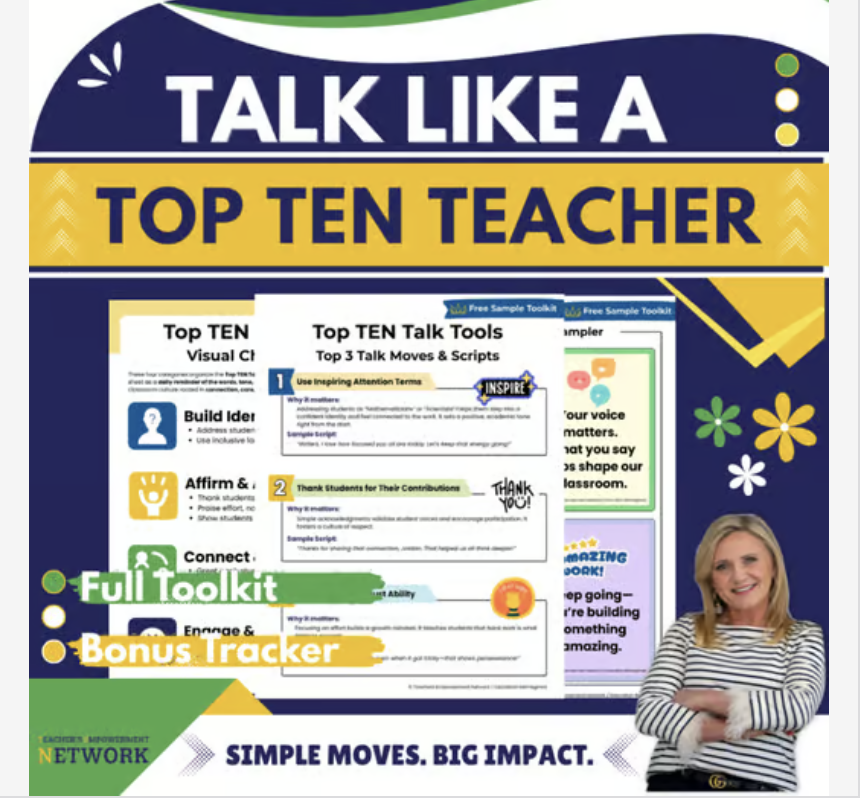
Grab the free Talk Like a Top TEN Teacher™ Guide and start noticing what your words are teaching students to expect.
Now let’s look at ten classroom-culture moves you can work on while you’re actually teaching.
1. Address the Class with Inspiring Terms
Start the day with intention.
Skip the generic “boys and girls” and choose language that builds pride and ownership:
“Good morning, Mathematicians.”
“Let’s go, Scientists.”
“Welcome, Scholars.”
These identity-based greetings are deceptively powerful.
Language builds identity — and identity drives behavior.
This small shift sets the tone before instruction even begins.
2. Thank Students for Their Contributions
Simple. Consistent. Powerful.
“Thanks for sharing your thinking.”
“I appreciate your voice in this conversation.”
When students feel seen and valued, they participate more.
These tiny phrases signal: your ideas matter here.
3. Praise Effort, Not Just Achievement
Yes, accuracy matters.
But real growth comes from persistence.
“I can tell you really stuck with that challenge. That’s what learning looks like.”
When effort is named and normalized, students take risks.
And risk-taking is foundational to a growth-minded classroom culture.
These shifts may sound small.
But used consistently? They change how students show up.

 Top TEN Pro Tip: Teach the Power of Yet
One of the most powerful mindset shifts you can teach students is the power of “not yet.”
When students say, “I can’t do this,” adding one word changes the entire story:
“I can’t do this — yet.”
That simple shift reinforces that learning is a process, not a fixed outcome.
To reinforce this visually, I like using growth mindset motivational posters as daily anchors in the classroom.
Use one as a Quote of the Week and invite students to reflect on what it means in their learning.
4. Greet Every Student Personally
Your hello might be one of the most important moments of a student’s day.
Use names. Make eye contact. Let them know they matter.
“Hey Jayden — glad you’re here today.”
These simple, consistent greetings build trust and predictability.
5. Share Your Stories
Want to boost engagement without glitter, gimmicks, or cutting out 27 laminated pieces?
Tell a story.
A funny moment. A classroom fail. A real-life connection.
Stories humanize you and help students connect to both you and the learning.
6. Use Inclusive Language
Shift from control-based language to community-centered language.
Swap “my rules” for “our expectations.”
Use “we,” “us,” and “our classroom.”
“Let’s make sure we’re all ready to move forward together.”
Inclusive phrasing reinforces belonging and accountability.
7. Smile and Have Fun
This matters more than most teachers realize.
Your energy sets the tone.
When students sense that you enjoy being in the room, they show up differently.
Joy isn’t extra. It matters.
8. Be Vulnerable and Embrace Mistakes
Be human. Mess up. Model repair.
“Oops — I made a mistake. Let’s fix it together.”
When students see you make a mistake and keep going, they learn how to do the same.
9. Show Them You Care
You don’t need grand gestures or big speeches.
You need consistency — and the courage to say the words out loud.
- “I care about you.”
- “I want to help you succeed.”
- “I’m glad you’re in this room.”
These statements build trust over time.
10. Stop Saying “I’ll Wait”
If you find yourself saying “I’ll wait...” over and over, stop waiting.
Ask yourself what students are supposed to be doing in that exact moment.
Do they know it? Have you explicitly taught it? Have they practiced it? Have you noticed and reflected on it with them?
Don’t manage what you haven’t taught.
Instead of waiting them out, try:
- “Let’s reset that transition and try it again.”
- “What should this look and sound like right now?”
- “Show me you’re ready to move forward.”
- “We practiced this. Let’s use it.”
The words matter. But the routine behind the words matters even more.
That’s why teacher language is only one piece of building the classroom you actually want to teach in.
Want more help with exactly what to say? Grab the free Talk Like a Top TEN Teacher™ Guide.
TEACH LIKE A TOP TEN™
The Easiest Time to Get Better at Teaching Is When You’re Teaching.
You have real students in front of you right now giving you information every single day.
Inside Teach Like a Top TEN™, we use that information to figure out what to work on next, try it with your students, notice what happens, and keep building.
Inside the membership:
✓ Timely classroom challenges and frameworks
✓ Build It Together™ live training
✓ When It Gets Messy™ coaching and Q&A
✓ Two live sessions each month
✓ A private community of growth-minded teachers
Build it FIRST. Manage it SECOND.™
SEE WHAT’S INSIDE →$27/month • Cancel anytime
WANT TO START WITH ONE MOVE?
Start With Your Teacher Language.
Grab the free Talk Like a Top TEN Teacher™ Guide and start noticing what your words are teaching students to expect.
GET THE FREE GUIDE →KEEP BUILDING
Continue Building Culture First
Explore more ways to strengthen relationships, student ownership, routines, classroom community, and positive home communication.

ABOUT SARAH
This Is Not Another Classroom Management Quick Fix.
I’m Sarah Legault, founder of the Teachers Empowerment Network, instructional coach, and former classroom teacher with more than 20 years in education.
I spent the first decade of my career believing stronger teaching meant becoming better at managing behavior. Everything changed when the right coach helped me understand that I did not need another collection of strategies.
I needed to build the classroom culture underneath the behavior.
Culture First. Behavior Second.™
My work is rooted in High Expectations, Student Voice, and Relationships.
I help teachers build the routines, expectations, teacher language, learning experiences, relationships, and opportunities for student ownership that shape how students enter, participate, transition, collaborate, reflect, and learn together.
The easiest time to get better at teaching is when you’re teaching.
Notice what’s happening. Teach into it. Practice it. Reflect on it. Keep getting better.
Build the classroom you actually WANT to teach in.
Some links in this post may be affiliate links, meaning I may earn a small commission at no additional cost to you. I only share classroom tools and teacher resources I have personally used or genuinely believe can support stronger routines, student ownership, classroom culture, and teacher well-being.
Copyright © Education Reimagined, LLC. All Rights Reserved.