How One 15-Minute Weekly Habit Transforms Classroom Behavior and Classroom Culture
Feb 01, 2026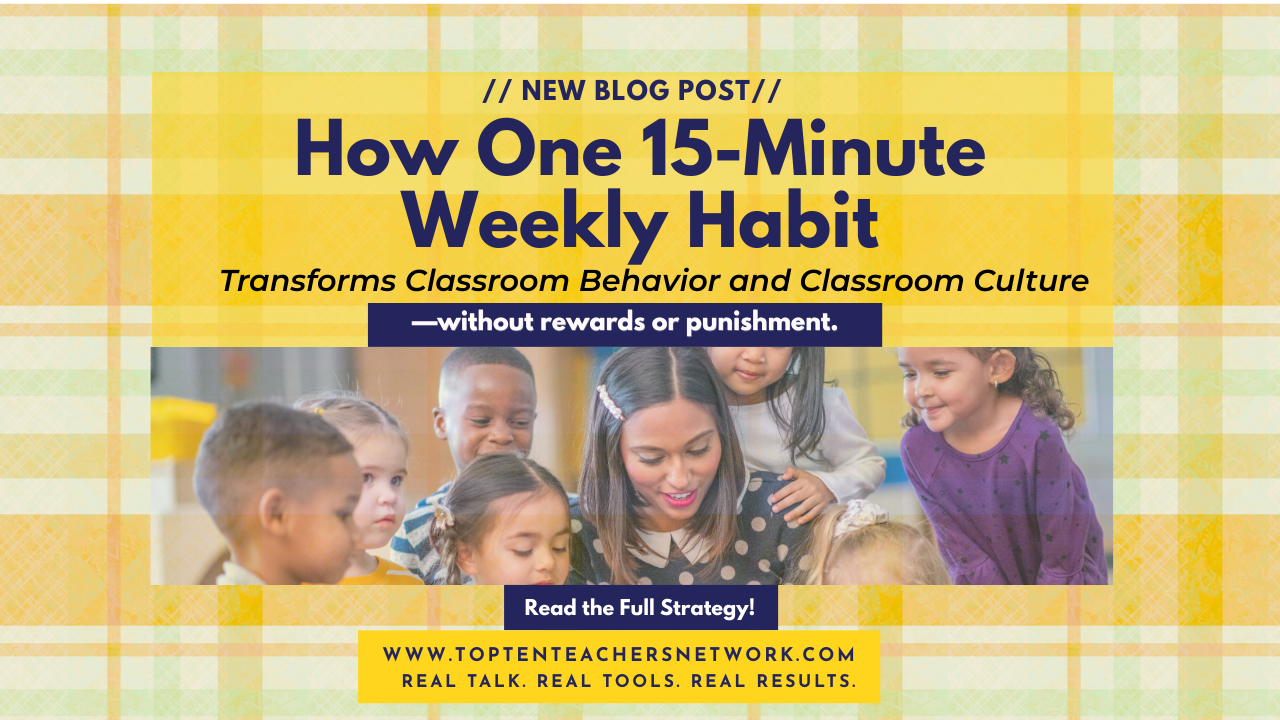

How One 15-Minute Weekly Habit
Builds Stronger Classroom Culture and Encourages Student Ownership
In this post, I’m going to show you how to intentionally recognize students who go above and beyond classroom expectations by mailing postcards home — not randomly and not only when you happen to remember, but through one simple weekly routine.
You’ll learn how to notice meaningful actions, document them quickly, and send recognition home in a way that strengthens relationships, reinforces classroom values, and supports the culture you are intentionally building.
You’ve got mail?
If you’ve never seen the classic movie You’ve Got Mail, add it to your weekend list. From The Shop Around the Corner to Meg Ryan and Tom Hanks, it captured something that felt almost magical at the time: genuine, personal connection in a world that was just beginning to digitize.
Fast forward to today.
Email is constant. Notifications never stop. And most of what shows up in our mailboxes? Bills.
That’s exactly why real mail still matters — especially for students.
A handwritten postcard isn’t just “nice.” It’s unexpected. It’s personal. And when used intentionally, it becomes a powerful way to build relationships and reinforce the values of your classroom community.
This one weekly habit can help students feel seen, strengthen the connection between school and home, and encourage more of the actions you want growing inside your classroom.
If your classroom feels off, you may have already tried reviewing routines, repeating expectations, and adding more behavior strategies.
And yet… something still feels disconnected.
Small behaviors begin to build. Students stop taking ownership. You find yourself correcting more than connecting.
This is where many teachers get stuck — because stronger classroom culture isn’t built by managing students more.
It is built by intentionally creating a community where students feel seen, valued, and responsible for how the classroom works.
That work begins during the first three days of school, but it has to continue throughout the year.
Prize boxes, warnings, and louder reminders cannot create that kind of community. Students need meaningful opportunities to see what your classroom values look like in action.
One of the simplest — and most powerful — ways to do that?
A 15-minute weekly habit.
Step 1: Build Classroom Expectations With Your Students
Classroom culture doesn’t begin with a list of rules posted on the wall. It begins with shared expectations and student ownership.
During the first days of school, involve students in defining what your classroom values will look and sound like in action:
- Helping others
- Taking responsibility
- Contributing to the classroom community
- Showing care for people and shared spaces
When students understand the purpose behind the expectations and have a voice in bringing them to life, they are more likely to take ownership of the community they are helping to build.
Step 2: Make the Purpose Clear
This isn’t about quietly scanning the room for someone who has earned a postcard.
It is an opportunity to coach students, reinforce classroom values, and help them notice what meaningful contributions look like.
I’m transparent with students about what I’m noticing and why. I say things like:
That’s where the magic happens.
The recognition becomes instructional.
It shapes behavior before problems start.
It invites students into leadership instead of correcting them out of mistakes.
Early in the year — or during a classroom reset — I tell students:
Notice the difference:
- Not “being good”
- Not simply “following the rules”
- But contributing to the community
Students grow into what we consistently notice and recognize.
Postcards are addressed to caregivers — but written directly to the student — reinforcing identity, pride, and ownership in a personal way that sticks.
Step 3: Notice Above-and-Beyond Contributions — Not Simple Compliance
Instead of spending all of your energy scanning for mistakes, intentionally notice:
- Students stepping into leadership
- Acts of kindness and inclusion
- Students working through frustration responsibly
- Classmates supporting one another
- Students taking ownership without being reminded
These moments are happening every day. We simply have to train ourselves to notice them.
As you see them, write them down.
This becomes the first column of your weekly recognition routine:
Contribution to Our Classroom Community.
You don’t need anything complicated — just one reliable place to capture what you’re noticing.
Step 4: Write It Down in the Moment
Here’s the truth:
“I’ll remember later” almost never works.
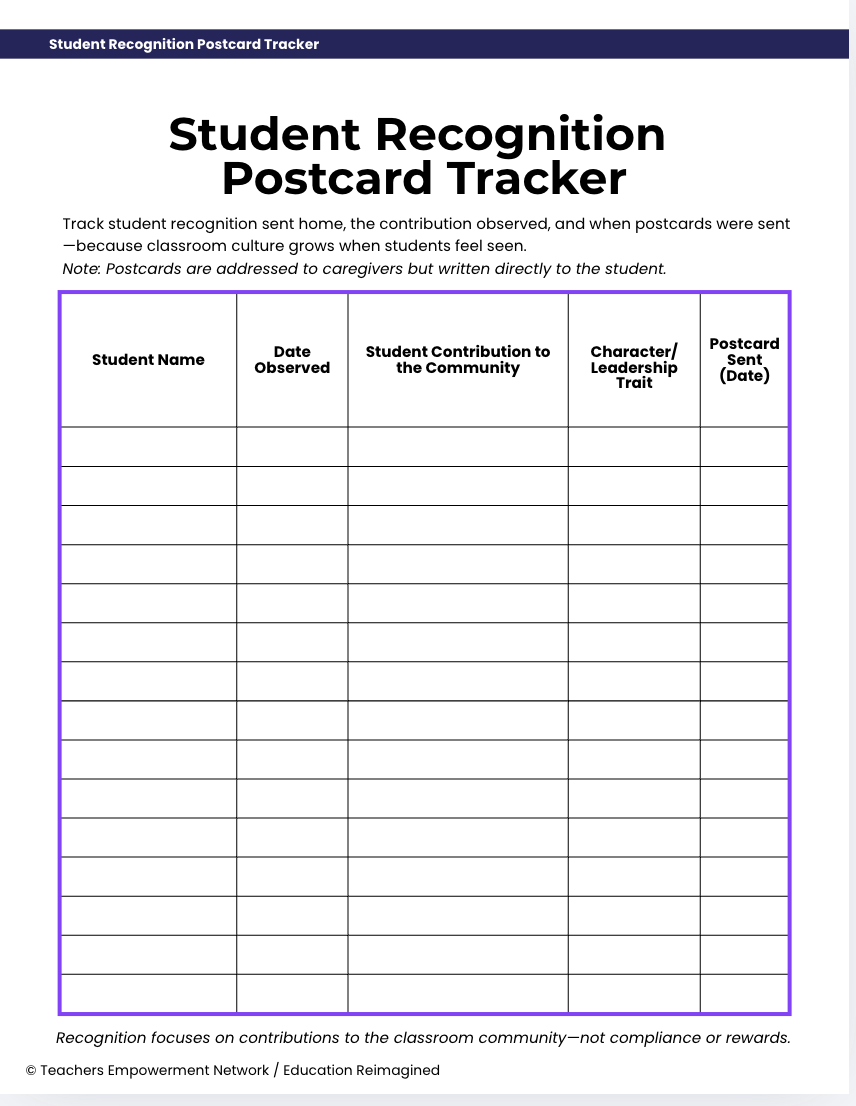
Keep a simple class list — digital or printed — and jot down a quick note whenever you notice something meaningful.
This takes only a few seconds in the moment and saves you time when you sit down to write the postcards.
Track:
- Student name
- Date
- Contribution observed
- Why it mattered to the classroom community
This is where a simple tracking sheet becomes your best friend.
Step 5: Put the 15-Minute Weekly Habit Into Action
Choose one day each week.
Thursdays work beautifully because postcards often arrive over the weekend.
Set a timer for 15 minutes.
Write three to five postcards maximum.
Then stop.
Trying to do too much is how meaningful routines disappear by October.
This habit works because the recognition is personal, specific, and memorable.
Address the postcard to the caregiver — but write the message directly to the student. Their family gets to share in the positive recognition too.
Use specific language that connects the student’s actions to the kind of person and community member they are becoming:
Ria,
You strengthened our classroom community when you offered to clean up a paint spill without being asked. Your kindness and initiative helped everyone keep learning and showed what it looks like to take care of our shared space. Keep it up!
— Ms. Legault
Classroom-ready postcards I recommend:
- Colorful Inspirational Classroom Postcards
- National Parks–Themed Postcards
- Stay Sharp! Desert Edition
Step 6: Track Positive Home Communication
Tracking is the difference between a meaningful idea and a routine you can actually sustain throughout the year.
It isn’t extra. It is an intentional part of making sure every student is seen, recognized, and supported.
And to be clear — this tracker is for you, not your students.
Tracking helps you notice patterns you might otherwise miss. It helps you recognize students who tend to fly under the radar and identify students who may need more coaching, connection, or opportunities to step into leadership.
I used this routine consistently for more than a decade in my own classroom. It wasn’t something I did occasionally when I had extra time. It became part of how I intentionally built relationships and strengthened classroom culture throughout the year.
Why this matters:
-
You won’t have to rely on memory to know who has received positive communication
-
Quieter students and students who need more support are less likely to be overlooked
-
You’ll have specific, strengths-based language ready for report cards and conferences
-
More challenging conversations with families can begin from a stronger foundation
-
Students feel seen for who they are becoming, not only corrected for what went wrong
-
You can intentionally identify which students need recognition, coaching, connection, or a new opportunity to contribute
This isn’t about simply being “nice.”
It is about making recognition intentional, equitable, and part of the way your classroom community works.
Free Download: Positive Home Communication Tracker
To make this habit simple and sustainable, I created a Positive Home Communication Tracker you can use digitally or print for your teacher binder.
- Track positive communication sent home
- Record the contribution you noticed
- Make recognition more equitable and intentional
Want to Build This Into Your Classroom Culture?
Postcards are one powerful way for teachers to recognize students and strengthen the connection between school and home.
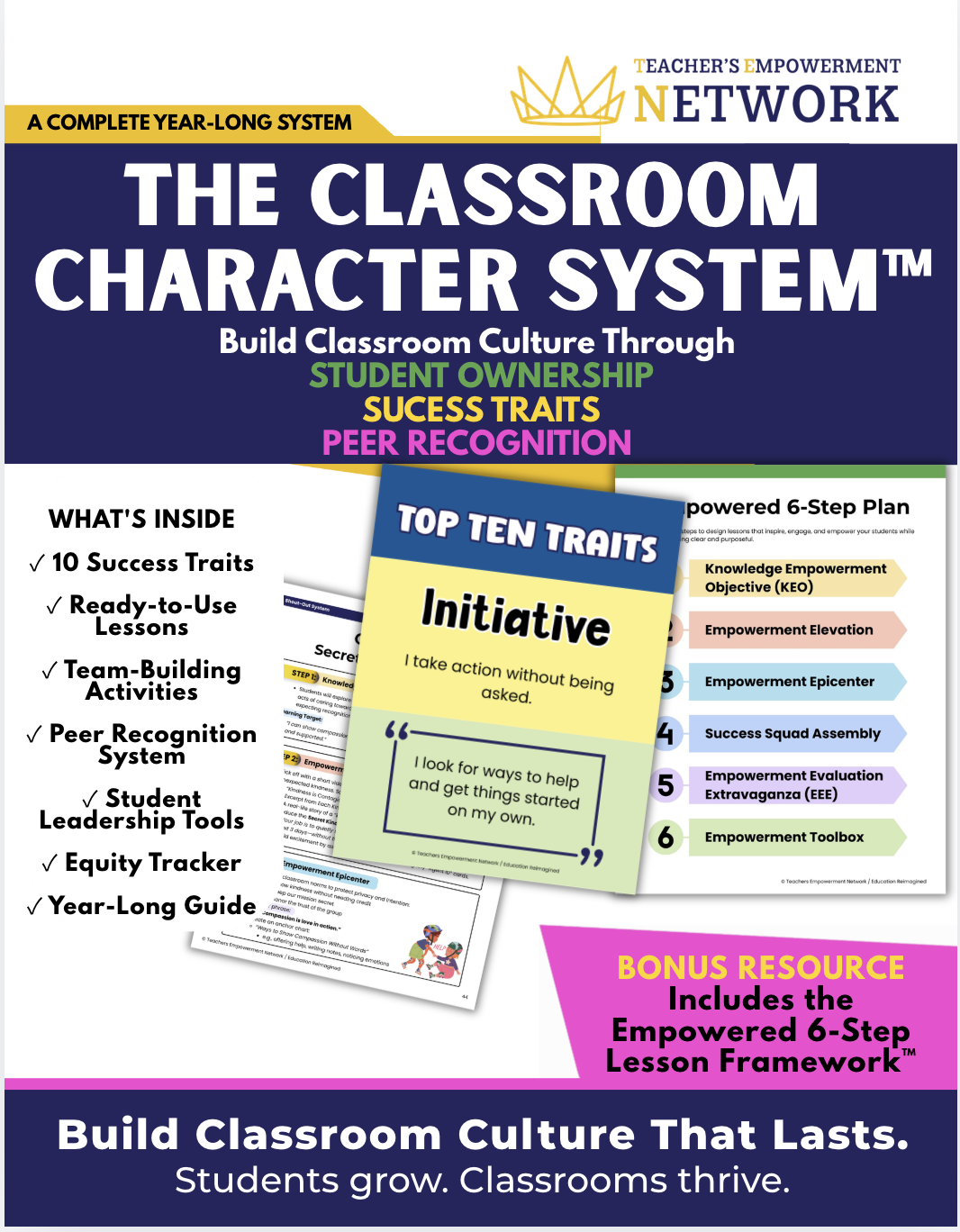
The Classroom Character System™ takes that work even further by helping students learn to notice, name, and celebrate the strengths and contributions they see in one another.
- Student ownership
- Peer recognition
- Classroom leadership
- Shared success traits
- A stronger sense of community
It is a complete, year-long structure you can introduce during the first three days of school and continue using as your classroom community grows.
Inside the First 3 Days of School course and the Teach Like a Top TEN™ Community, teachers learn how to build these kinds of routines intentionally from the very beginning — so classroom culture is not left to chance.
👉 Explore the Classroom Character System™
Final Takeaway
For years, I thought becoming a better teacher meant working harder.
What I eventually learned was that stronger classrooms aren’t built through more behavior strategies, more reminders, or more teacher effort.
They’re built through the small, intentional things we do consistently:
- Language that reinforces identity
- Recognition that strengthens relationships
- Opportunities that build ownership
When students see themselves as leaders, problem-solvers, and valued contributors, they begin to show up differently.
When students understand what meaningful contribution looks like, they become more aware of how their actions affect the classroom community.
And when students feel genuinely seen, they are more likely to take ownership of the classroom they are helping to build.
Students support what they help create.
And strong classrooms are built intentionally.
You don’t need another behavior chart.
You don’t need another classroom management trick.
You need a classroom where students feel seen, understand what matters, and know how to contribute.
That’s where classroom culture begins — and how it continues to grow throughout the year.
```html
TEACH LIKE A TOPTEN™
Keep Building the Classroom You Actually Want to Teach In
If you are tired of collecting classroom-management ideas that never become part of how your classroom actually runs, you are in the right place. I help teachers intentionally build routines, expectations, relationships, student ownership, and lesson experiences that work together from the very beginning.
Instead of asking,
“How do I manage this behavior?”
Start asking,
“What kind of classroom are we intentionally building?”
Continue Building
Strong classrooms are built one intentional decision at a time. Continue with these teacher favorites:
01 Talk Like a TopTEN Teacher: The Power of Intentional Language
02 10 Easy Moves to Build a Classroom Culture That Works
03 Classroom Organization That Builds Community—not Just a Pretty Room
FREE EMAIL NEWSLETTER
Teach Like a TopTEN™
Real Talk. Real Tools. Real Results.
Get classroom culture ideas, intentional teacher language, student ownership strategies, and classroom-building frameworks delivered straight to your inbox.
FIRST 3 DAYS OF SCHOOL™
Before You Teach Content, Build the Classroom
Cute icebreakers can fill your schedule. They do not teach students how to learn, participate, contribute, and take ownership together.
The First 3 Days of School™ helps you intentionally build:
✓ Expectations students understand and experience
✓ Routines students can practice and eventually own
✓ Relationships that strengthen trust and participation
✓ Student voice from the very beginning
✓ A classroom community students know how to contribute to
Build it first. Manage it second.
BUILD MY FIRST 3 DAYS →WANT ONGOING SUPPORT?
Build With Us Inside Teach Like a TopTEN™
Join teachers intentionally building classroom culture, routines, expectations, teacher language, student ownership, and lesson experiences together—before school begins and throughout the year.
EXPLORE THE COMMUNITY →
ABOUT SARAH
This Is Not Another Classroom-Management Quick Fix
I’m Sarah Legault, founder of the Teachers Empowerment Network, instructional coach, and former classroom teacher with more than 20 years of experience helping teachers build stronger classrooms.
My work is built around one belief:
Culture First. Behavior Second.™
That does not mean behavior does not matter. It means students are more likely to meet expectations when the routines, relationships, ownership opportunities, and classroom experiences have been intentionally built first.
I do not help teachers collect more disconnected ideas. I help teachers build the small moments that shape the entire classroom: how students enter, talk, transition, participate, reflect, solve problems, and contribute.
Everything I teach is rooted in the 3 Success Pillars™: Student Voice, Relationships, and High Expectations.
Real Talk. Real Tools. Real Results.
Helping teachers build the classroom they actually want to teach in—one intentional decision at a time.
Strong classrooms are built intentionally.
Some links in this post may be affiliate links, meaning I may earn a small commission at no additional cost to you. I only recommend classroom tools and resources I have personally used or genuinely believe support effective teaching and teacher well-being.
Copyright © Education Reimagined, LLC. All Rights Reserved.
```